Across the African diaspora, cultural heritage is not something that simply survives on its own. It is carried forward on purpose, through story, food, music, and the quiet insistence of communities who refuse to let their history fade. Understanding how that preservation actually happens offers a useful lens for why organizations like CADI exist at all.
The Wisdom of Sankofa
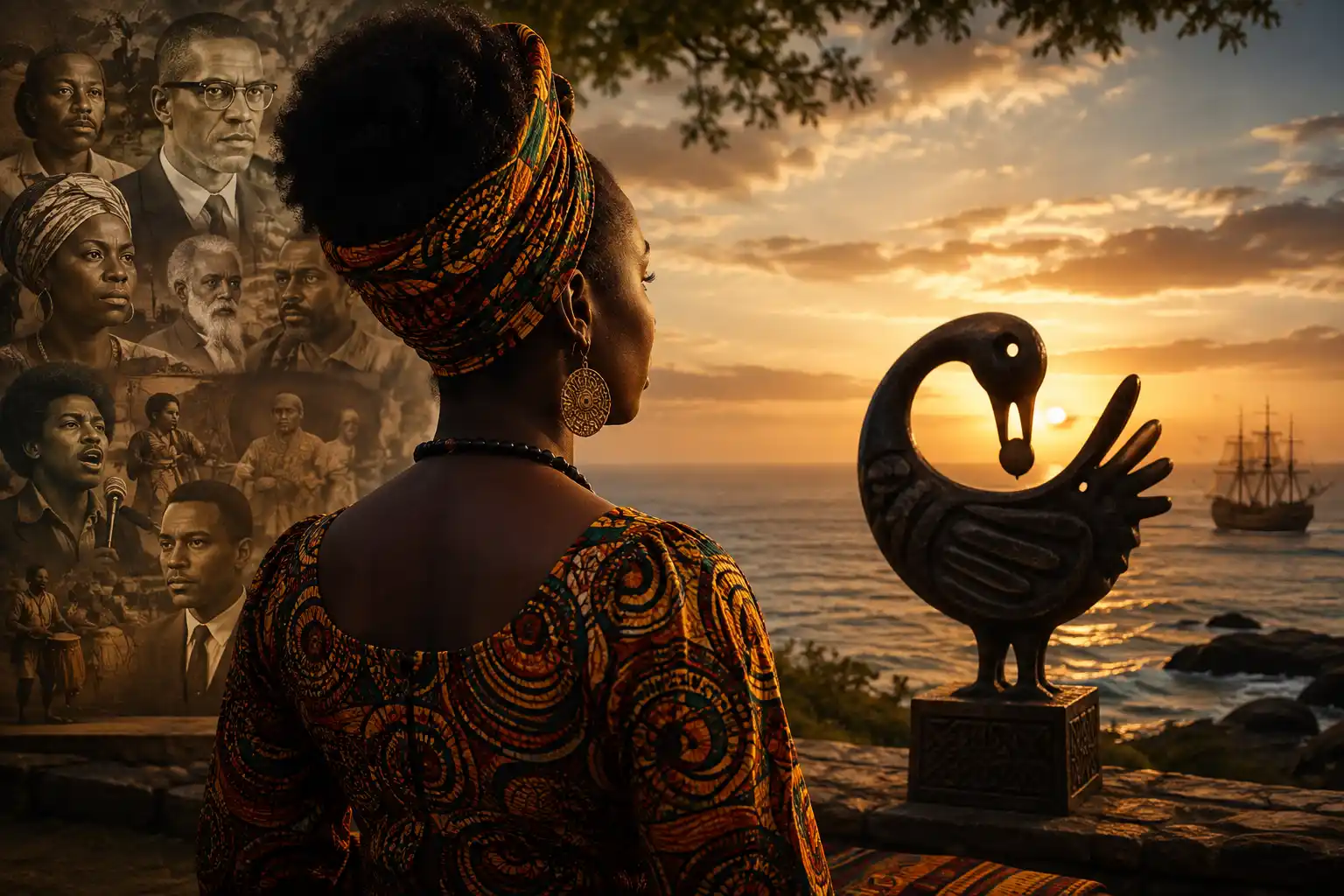
One of the clearest illustrations of this idea comes from a single symbol: Sankofa. Originating with the Akan people of Ghana, Sankofa is often depicted as a bird facing forward with its head turned back, retrieving an egg from behind it. The name itself comes from the Twi phrase for “go back and get it,” built on a proverb that says it is not wrong to return for what you have forgotten.
For the Akan, this was never about dwelling in the past. It was a practical philosophy: knowledge, identity, and wisdom from earlier generations are resources, not relics, and a community that discards them weakens its own foundation. That idea traveled far beyond Ghana. Among African Americans and other communities across the diaspora, Sankofa has become a widely recognized symbol of reclaiming identity and reconnecting with roots that were often deliberately disrupted.
Oral Tradition and Storytelling
Long before written records, oral storytelling carried African history, values, and practical knowledge from one generation to the next. That tradition became especially vital during and after the transatlantic slave trade, when written history was often denied to enslaved communities altogether. Storytelling filled that gap, and it still does today, showing up not only around firesides but in literature, film, spoken word, and community storytelling events that keep the practice alive for new audiences.
This is part of why CADI runs its Tales By Moonlight program. It is not a nostalgic exercise, but the same mechanism that has carried African cultural memory for centuries, adapted for a community in St. Louis today.
Food, Music, and Everyday Culture
Cultural preservation does not only live in formal ceremonies or symbols. It shows up at the dinner table and on the dance floor. Culinary traditions rooted in West Africa echo through dishes across the diaspora, and rhythms carried across generations still shape contemporary music. These everyday practices matter because they are accessible: no museum or archive is required to participate, just a kitchen, a gathering, or a good playlist.
That is the spirit behind events like Echoes of Africa, CADI’s signature festival celebrating African art, food, music, and fashion. It treats culture as something to be lived and shared in community, not just studied.
Why Community-Led Preservation Matters
Grassroots, community-based initiatives play an outsized role in keeping cultural heritage alive, often more so than large institutions. Cultural festivals, oral history projects, and community archives tend to be led by the people whose heritage is actually being preserved, which keeps the work grounded in lived experience rather than abstraction. Diaspora communities worldwide are increasingly building these initiatives themselves, funding historical preservation, supporting local artisans, and creating space for cultural exchange.
This is the same principle CADI is built on: preservation works best when it belongs to the community it serves.
Get Involved
If this resonates with you, there are real ways to take part. Explore CADI’s volunteer opportunities, or get in touch to learn more about our programs preserving African cultural heritage in St. Louis and beyond.
